Poker on the Mississippi riverboats: what's documented and what isn't
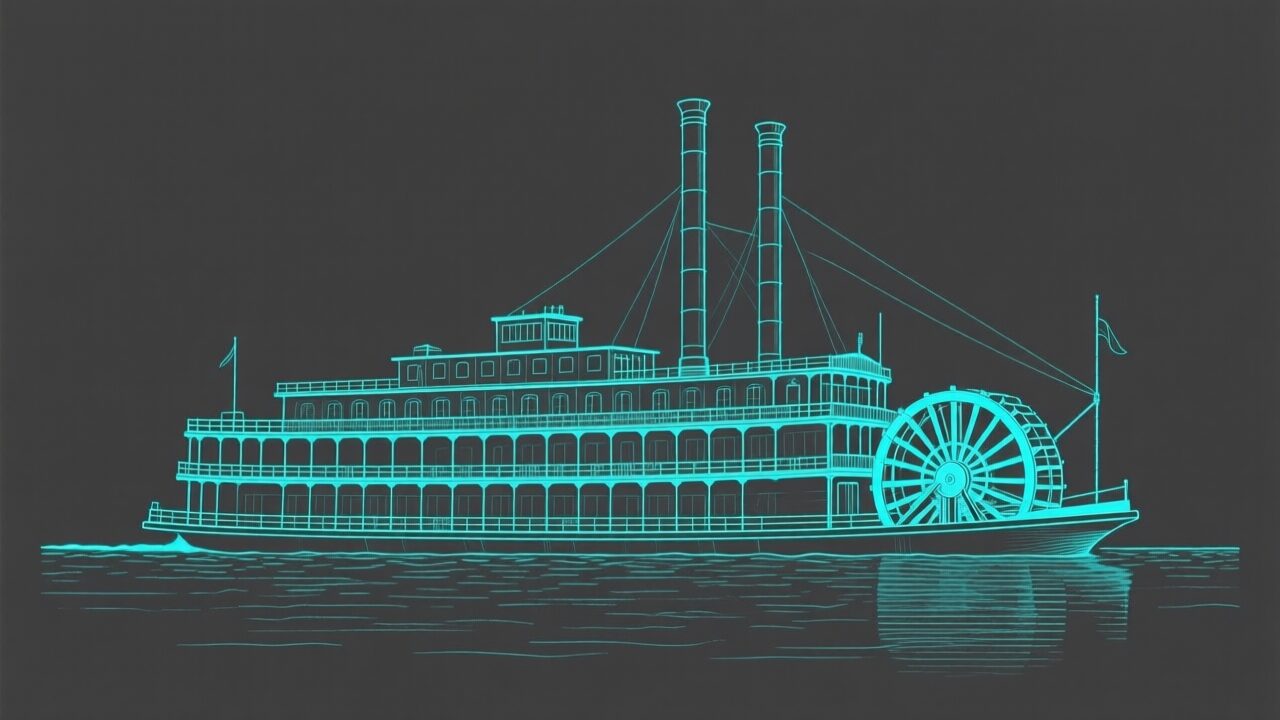
Everyone knows the picture: a side-wheeler running down the Mississippi, a gaslit saloon, and a gambler in an embroidered waistcoat taking a plantation off some unlucky planter. The image is so solid it’s hard to accept that almost none of it is documented.
What we do have is a handful of texts, four or five, written by people with obvious agendas and published decades after the events they describe. This article goes through them one by one. The real version turns out to be stranger and funnier than the romantic one, and it explains why poker became the game you train today.
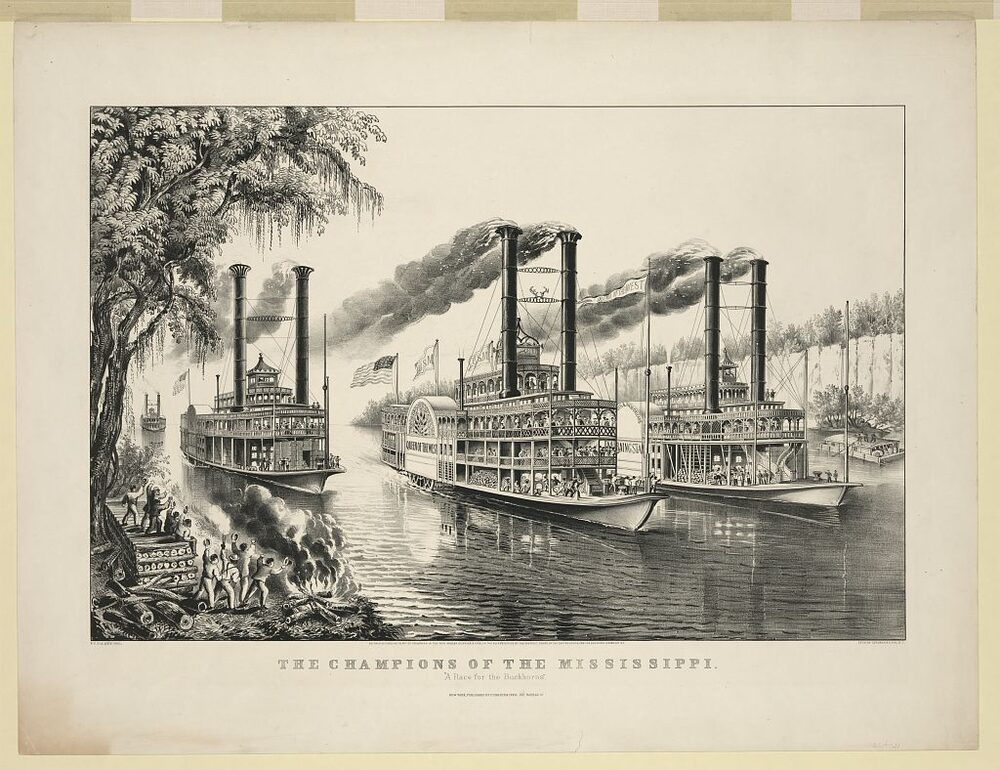
That’s the place to start, because it applies to every illustration in this article and in any other on the subject. Not one photograph exists of 1830s river poker. The daguerreotype was announced in 1839 and took years to become portable. Everything we have is later commercial lithography, book engraving and reconstruction. The picture popular culture holds of this era was manufactured, literally, after the era ended.
The first hand anyone wrote down was a swindle
The oldest account describing a specific hand comes from the English actor Joe Cowell, in Thirty Years Passed Among the Players in England and America (Harper & Brothers, 1844). The events date to 1829, and they don’t happen in New Orleans but aboard the steamer Helen M’Gregor, bound for New Orleans. Conflating the two is the first error nearly every popular account carries.
Cowell was being taught euchre when he noticed the next table over:
“One night, while I was getting instructed in the mysteries of uker, and Sam was amusing himself by building houses with the surplus cards at the corner of the table, close by us was a party playing poker.”
What follows isn’t an epic contest. It’s a con. A passenger he calls “the gentleman in green spectacles” uses the confusion of the boat running aground to stack the deck and deal out three monsters: four queens with an ace, four jacks with an ace, and four kings with an ace. The plan was to collect. It failed on a detail any player will recognise instantly: the winning hand, four kings, went by accident to a young lawyer, son of the mayor of Pittsburgh, who by Cowell’s account “was unconscious of the real value of his hand.” He took the $2,023 pot without ever quite grasping what had happened.
The first hand of poker in the written record was won by someone who didn’t know what he was holding. As origin stories go, it’s more honest than the legend.
Twenty cards, four players, and no straights
The 1829 game bore little resemblance to the modern one. Cowell explains it was played only with aces, kings, queens, jacks and tens, five cards each, four players, no draw and no community cards. You bet and you showed.
A nice detail: describing it, Cowell writes “twenty-five cards only,” but the cards he then lists come to twenty. The oldest and most-quoted source on poker contains an arithmetic error in its most-quoted sentence. Historians like David Parlett flag it with a “[sic]”; a good many poker sites fix it silently and credit Cowell with a number he never wrote.
Jonathan H. Green confirms the structure in An Exposure of the Arts and Miseries of Gambling (1843): “It is usually played with twenty cards, that is, ace, king, queen, jack, and ten, of each suit… It is played by two, three, or four persons, each having five cards; no trump is used.”
Twenty cards has consequences that reshape the whole game:
- No flushes. With five cards per suit, suited combinations don’t work as a meaningful category.
- No straights. Every card is consecutive, so a run distinguishes nothing.
- Four aces cannot lose. Cowell says it flatly: “The four aces, with any other card, cannot be beat.”
That last point is what eventually broke the game. An unbeatable hand is a design flaw, and the fix arrived with the full deck. In the same 1843 book, Green already describes “a game of full deck poker, which is played with the full pack of fifty-two cards,” played by six people. There’s the real engine of the change: the deck grew so more people could sit down, and the flush appeared as a by-product. The straight took decades longer, and its adoption was a moral argument before a technical one, because it removed precisely that unbeatable hand.
To see how far that hierarchy has come since it didn’t exist, the ranking of all 169 starting hands is the direct descendant of that argument.
Why the boat
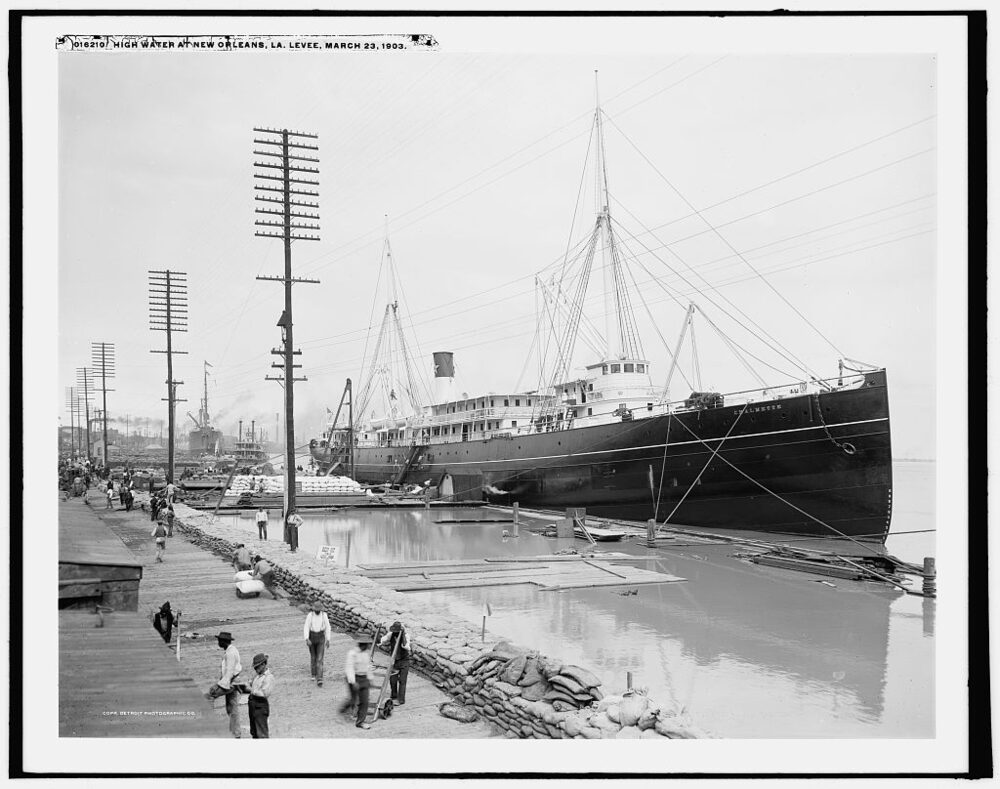
River traffic grew at a brutal pace. Steamboat arrivals at the port of New Orleans went from 21 in 1814 to 2,770 in 1846, by which point the city was the fourth busiest commercial port in the world. Upriver navigation, the bottleneck, was solved in 1816 by Henry Shreve’s Washington: New Orleans to Louisville in 25 days. By 1853 the same trip took four and a half.
On why those boats filled up with card games, contemporary sources agree on three things, all collected by the historian Thomas Ruys Smith in Blacklegs, Card Sharps, and Confidence Men (LSU Press, 2010):
- Enforced leisure among strangers. Days shut in with people you’ll never see again, in a closed saloon, with nothing to do.
- Everyone carried cash. In an age without reliable transfers, money travelled in person, in the passenger’s pocket.
- The crew took a cut. Edward Eggleston wrote in 1872 that a percentage of the gamblers’ takings was one of the captain’s perquisites. John O’Connor noted that the marked-card man couldn’t operate without the barkeeper’s connivance, whom he paid a share.
In 1833 the traveller Thomas Hamilton ran into a captain who “was decidedly the greatest gambler on board; and was often so drunk as to be utterly incapable of taking command of the vessel.” The boat wasn’t a place where gambling was tolerated. It was a business that gambling was part of.
Vicksburg, 1835: the river wasn’t the cradle, it was the refuge
Here’s the fact that inverts the standard story.
On 4 July 1835, in Vicksburg, Mississippi, a man named Francis Cabler broke up the Independence Day barbecue thrown by the local militia. He was seized carrying a loaded pistol, a large knife and a dagger. They tied him to a tree, flogged him, tarred and feathered him, and gave him 48 hours to leave. That night a meeting at the courthouse gave every professional gambler in town 24 hours, and posted a hundred copies of the notice around the streets.
Most of them left. On the 6th, the militia and several hundred citizens went through the riverside gambling district smashing roulette wheels and faro tables. At Alfred North’s coffee house there was gunfire, and Dr Hugh Bodley, a militiaman, was killed. Five men identified as gamblers were hanged, and the bodies were left up for twenty-four hours. Bodley’s monument still stands: “Murdered by the Gamblers July 5, 1835 while defending the morals of Vicksburg.”
The historian Joshua Rothman calls it the deadliest outbreak of extralegal violence in the slave states between the Southampton insurrection and the Civil War. The news reached London by late August, and Lincoln criticised it in his 1838 Lyceum address in Springfield.
The interesting part comes after. The Louisville Advertiser wrote that the events “have kindled a spirit throughout the lower country… obliging the blackleg fraternity to make their escape with all haste.” River towns cleaned house one after another, and the gamblers went to the one place no town meeting had jurisdiction over: the water. As the historian John Findlay puts it, the steamboat came to supplant the under-the-hill districts as a centre for gaming.
The Mississippi gambler wasn’t born on the boat. He ended up on the boat because he was driven off dry land, on a specific date and for a specific reason.
And there’s an irony that Green himself, the country’s foremost anti-gambling campaigner, put on the record about Vicksburg: he had no doubt that three quarters of the town’s citizens were more or less addicted to gambling. They hanged five outsiders for a vice the neighbourhood shared.
One book manufactured most of the imagery
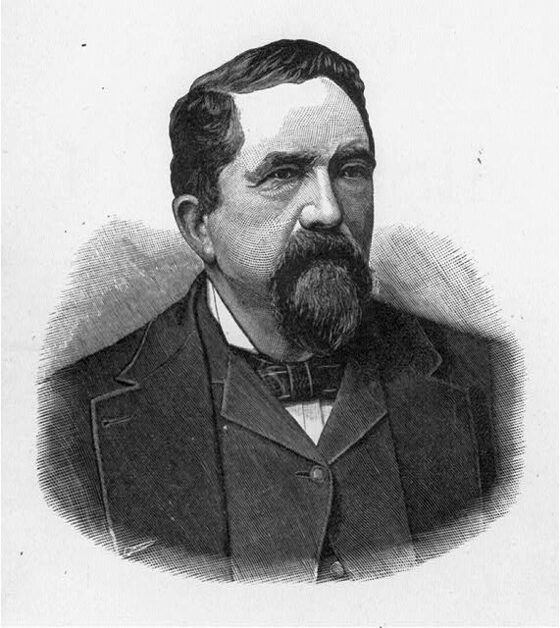
George Devol published Forty Years a Gambler on the Mississippi in 1887, at fifty-eight, about events up to forty years earlier, through his own publishing house (Devol & Haines). It’s a hugely entertaining book and it is, by a distance, the most influential source on the subject.
Too influential. Thomas Ruys Smith puts it plainly: most of the popular stories of riverboat gambling are traceable to Devol’s reminiscences. This isn’t many sources agreeing. It’s one self-published book recycled for a hundred and forty years.
Louis Hunter, the standard economic historian of the steamboats, dismissed his accounts for “the heavy coating of adventure and excitement with which his tales are varnished.” Bernard De Voto used him as a corrective to Mark Twain: to read Devol, he said, is to perceive at once that the river as it was is not the river of Mark Twain.
Devol didn’t much hide the act, either. He describes throwing his tools in the river and declaring he intended to live off fools and suckers, and moralises his own swindles with “it is a good lesson for a dishonest man to be caught by some trick, and I always did like to teach it.” His numbers, including the two million dollars he claims to have won, don’t hold up.
Read him as literature. Never as statistics.
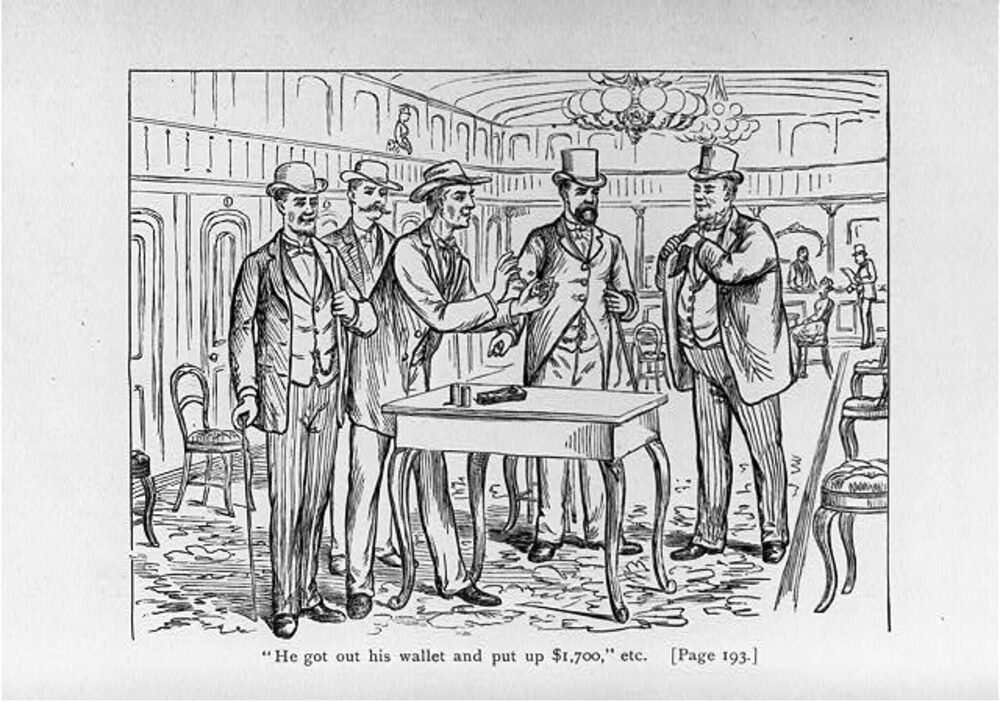
”pure humbug”: the debunking arrived in the nineteenth century
The fabulous fortunes won at steamboat tables are the best-loved part of the legend, and people were already laughing at them while the legend was forming. John O’Connor, who was in the trade himself, wrote:
“As for the tales regarding the fabulous sums bet at poker-tables on our western rivers, they are all pure humbug. I have grave doubts whether a brag of two thousand dollars has ever been lost and won at a card-table on the Mississippi River, since the steamer Pennsylvania descended that stream in 1813.”
He doubted a single two-thousand-dollar pot had been seen on the river in sixty years. He wasn’t the only one tired of it: in 1849 a contributor to the weekly Spirit of the Times, which ran a couple of dozen river gambling stories between 1840 and 1859, was already complaining that the magazine’s card stories were “always” set on the Mississippi. The cliché was recognisable as a cliché fourteen years after Vicksburg.
The elegant riverboat gambler is, to a large extent, a literary character. Benjamin Drake introduced him to readers as a new type in 1836, the Spirit of the Times industrialised him, Devol gave him a face, and then he was inherited by Edna Ferber in Show Boat, by Margaret Mitchell’s Rhett Butler and by Faulkner’s Thomas Sutpen.
Four claims that get repeated and don’t hold
| The claim | What’s actually the case |
|---|---|
| Poker descends from Persian As Nas | The earliest descriptions of As Nas date from 1890 and 1895, sixty years after poker is documented. And “as” comes from the French as, which points to European influence running the other way. Stewart Culin proposed it in 1895; Parlett dismantled it in the 1990s. |
| Green called poker “the cheating game” in 1834 | The phrase doesn’t appear in Green’s text. It circulates by chain citation. What is true, and better, is that Green describes poker inside a book devoted to teaching how cheating works, and gives more space to rigging the game than to playing it. |
| There were 600 to 800 professional gamblers on the river | The figure appears without note or source in popular accounts, and has no equivalent in the academic literature. It sounds rigorous because it’s a range. |
| Henry Clay invented it as a young man | Cowell records it in 1844 as rumour, not fact: “invented, as it is said, by Henry Clay when a youth.” It’s useful for something better: it shows poker’s legends were born at the same time as poker. |
The French-origin thesis, poque from the German pochen, is the best one available, and even so it’s worth saying what it is. Parlett argues it on etymology: “Je poque d’un jeton” is the exact parallel of betting a chip. But poque was a thirty-two to thirty-six card game for up to six players, structurally different, and no document exists showing anyone playing poque in New Orleans. It’s a reasonable inference. It isn’t a fact.
What we actually inherited
Out of all that noise one solid thing remains, and it’s still standing a hundred and ninety years later: poker is a game of incomplete information where the money is a detail and the decision is the game. The river gamblers understood that perfectly. Their edge wasn’t luck or marked cards, or not only that; it was knowing which hands were likely when their opponent didn’t.
That’s exactly what you can train today without staking a penny, using tools that would have looked like witchcraft in 1829. The equity calculator simulates thousands of runouts to give you your real win percentage. The range visualiser forces you to think about your opponent’s whole span of hands, which is the skill separating the gentleman in green spectacles from the lawyer who won without noticing. And in your training you can drill spots until the right decision comes automatically.
Four aces aren’t unbeatable any more, and thankfully nobody has to board a boat or risk a month’s wages to learn. What hasn’t changed is the hard part: deciding well with what you know, before you know how it ends.
Primary sources: Joe Cowell, Thirty Years Passed Among the Players in England and America (1844); J. H. Green, An Exposure of the Arts and Miseries of Gambling (1843, 1847 edition consulted); George H. Devol, Forty Years a Gambler on the Mississippi (1887); Vicksburg Register, 9 July 1835. Secondary: Thomas Ruys Smith, Blacklegs, Card Sharps, and Confidence Men (LSU Press, 2010); Joshua D. Rothman, “The Hazards of the Flush Times,” Journal of American History 95:3 (2008); David Parlett, A History of Card Games; Louis C. Hunter, Steamboats on the Western Rivers (Harvard UP, 1949).